
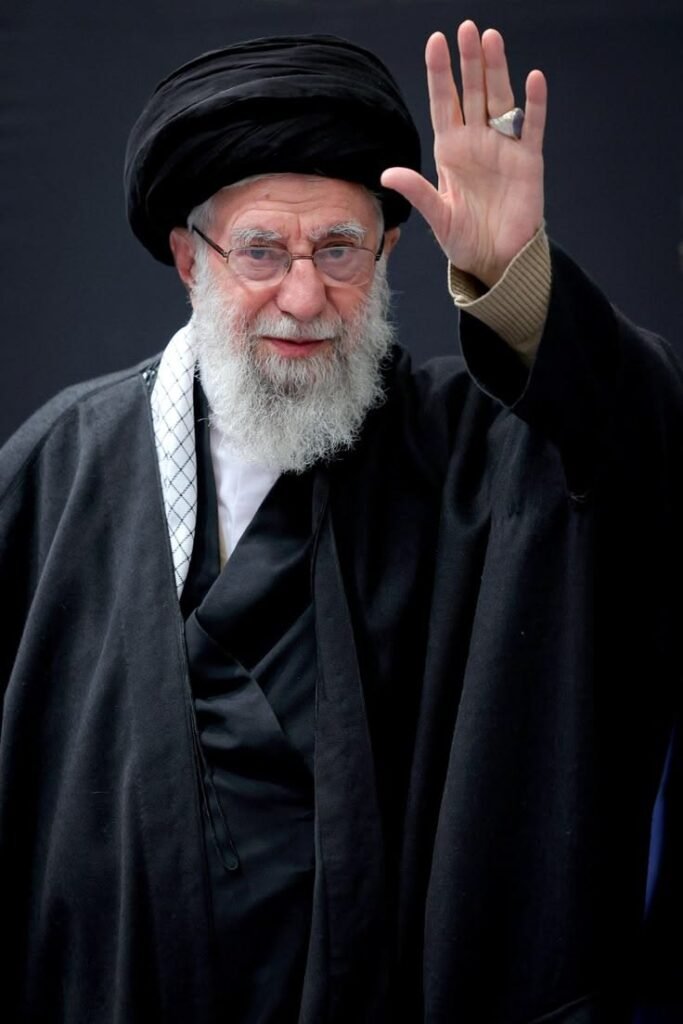
Ayatollah Seyyed Ali Hosseini Khamenei (19 April 1939 – 28 February 2026) was an Iranian Shia cleric and politician who served as the second Supreme Leader of the Islamic Republic of Iran from 3 June 1989 until his death. He previously served as the third President of Iran from 1981 to 1989. His 36-year tenure as Supreme Leader made him the longest-serving head of state in West Asia at the time of his death.
Born into a clerical family in Mashhad, Khamenei studied Islamic jurisprudence at seminaries in his home city, briefly in Najaf, and then in Qom, where he became a student of Ayatollah Ruhollah Khomeini. From the early 1960s, he was politically active in opposition to the Pahlavi monarchy of Mohammad Reza Shah, was arrested six times by the Shah’s intelligence service between 1963 and 1976, and was exiled for three years before the Islamic Revolution of 1979. Following the revolution, he held multiple senior positions in the new Islamic Republic — including membership of the Revolutionary Council, deputy minister of defense, Tehran’s Friday Prayer Leader, and member of parliament — before surviving an assassination attempt in 1981 and being elected president later that year.
After the death of Ayatollah Khomeini in June 1989, the Assembly of Experts selected Khamenei as Supreme Leader despite his status as a mid-ranking cleric, necessitating a constitutional amendment that removed the requirement for the supreme leader to hold the rank of marja’. Under his leadership, which lasted until his death in February 2026, Iran’s nuclear program developed through periods of diplomacy and confrontation with Western governments, Iran’s regional influence expanded through support of armed factions across the Middle East, and the country experienced multiple significant domestic protest movements. He was killed on 28 February 2026 during a coordinated military strike by the United States and Israel.
Quick Facts
| Category | Details |
| Full name | Seyyed Ali Hosseini Khamenei (سید علی حسینی خامنهای) |
| Date of birth | 19 April 1939 |
| Date of death | 28 February 2026, Tehran, Iran |
| Age at death | 86 |
| Birthplace | Mashhad, Khorasan Province, Iran |
| Nationality | Iranian |
| Religion | Islam (Twelver Shia) |
| Political affiliation | Combatant Clergy Association (Jame’ye Rouhaniyat Mobarez) |
| Office | Supreme Leader of Iran (1989–2026); President of Iran (1981–1989) |
| Predecessor as Supreme Leader | Ayatollah Ruhollah Khomeini |
| Successor as Supreme Leader | Mojtaba Khamenei (son, elected by Assembly of Experts, March 2026) |
| Education | Mashhad hawza (Soleiman Khan and Nawwab madrasas); Qom Seminary (advanced dars-e kharij); brief study in Najaf |
| Profession | Shia cleric; politician |
| Father | Seyyed Javad Khamenei (Islamic scholar; Azerbaijani origin) |
| Mother | Khadijeh Mirdamadi (Persian origin; died 15 August 1989) |
| Wife | Mansoureh Khojasteh Bagherzadeh (died 2 March 2026, from injuries sustained in the same strike that killed her husband) |
| Children | At least six, including Mojtaba Khamenei (second eldest son; Supreme Leader from March 2026) |
| Languages | Persian, Azerbaijani, Arabic |
Early Life and Family
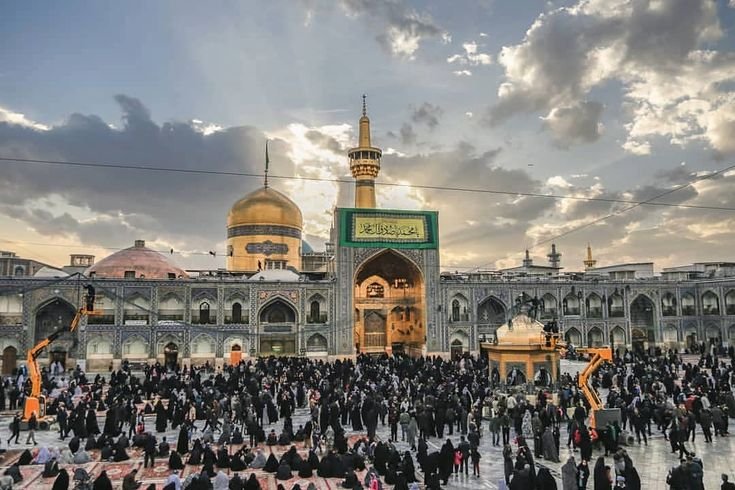
Seyyed Ali Hosseini Khamenei was born on 19 April 1939 in Mashhad, the capital of Khorasan Province in northeastern Iran. Mashhad is the second most populous city in Iran and holds particular significance in Twelver Shia Islam as the burial place of the eighth imam, Ali ibn Musa al-Ridha — making it one of the holiest cities in the Shia world and a major site of religious pilgrimage.
He was the second of eight children born to Seyyed Javad Khamenei, a Shia cleric of Azerbaijani origin whose family originated from the town of Khamaneh in northwestern Iran, and Khadijeh Mirdamadi, who came from a clerical Persian family in Yazd. The family’s economic circumstances were modest. In autobiographical reflections published on his official website, Khamenei described his childhood as marked by poverty, stating that the family lived in a poor neighbourhood of Mashhad, that his mother made clothes from his father’s old garments, and that they at times lacked sufficient food.
His father had studied Islamic theology in Najaf, Iraq — historically the most important center of Shia scholarship — before settling in Mashhad to practice and teach. The clerical household shaped Khamenei’s religious education from an early age. He began his studies at the age of four in a traditional maktab (religious primary school), learning the Persian alphabet and memorizing portions of the Quran under his father’s initial guidance, before entering formal religious schools.
A formative early influence, as Khamenei later recalled, came at age 13 in 1952, when the militant cleric Navvab Safavi delivered a speech at his school against the monarchy. Khamenei described this occasion in later writings as the moment when “the very first sparks of consciousness concerning Islamic, revolutionary ideas, and the duty to fight the shah’s despotism” were kindled in him.
Religious Education
Khamenei’s formal religious education followed the traditional structure of the Shia hawza (seminary) system. After completing primary schooling, he entered Mashhad’s theological seminary, studying at the Soleiman Khan and Nawwab madrasas. There he studied the standard intermediate-level curriculum — Arabic grammar, logic, Islamic jurisprudence (fiqh), and principles of Islamic legal theory (usul al-fiqh) — over approximately five years under scholars including Sheikh Hashem Qazvini and Ayatollah Mohammad Kazem Shariatmadari.
In 1957, at approximately 18 years of age, he traveled to Najaf, Iraq, to pursue advanced studies. He studied briefly under Ayatollah Mohsin al-Hakim and Ayatollah Shahab al-Din Mar’ashi Najafi before returning to Mashhad, reportedly due to family obligations and restrictions on Iranian students in Iraq at that time.
In 1958, Khamenei relocated to Qom — the principal center of Shia religious scholarship in Iran — where he pursued advanced seminary studies (dars-e kharij) at the Hojjatie school. In Qom, he attended lectures by prominent scholars including Ayatollah Hossein Borujerdi, the highest-ranking Shia cleric of his era, and Ayatollah Ruhollah Khomeini. He also attended classes under Ayatollah Hossein-Ali Montazeri, who would later become Khomeini’s designated successor before a public falling out in 1989.
His stay in Qom lasted until approximately 1964, by which point his increasing political activity under Khomeini’s influence had drawn the attention of SAVAK, the Shah’s intelligence and security organization. Multiple academic sources, including the Washington Institute for Near East Policy and Iran Chamber of Commerce, note that Khamenei was notably more engaged in political activity than in strictly religious scholarship during his Qom years, a characterization that Britannica also reflects.
Khamenei attained the clerical rank of Hojatoleslam — a mid-level Shia clerical title — sufficient to allow him to teach but below the level of Ayatollah or Grand Ayatollah (marja’). This relatively modest clerical rank would later become a central issue in the constitutional negotiations surrounding his appointment as Supreme Leader.
Political Activism Before the Iranian Revolution
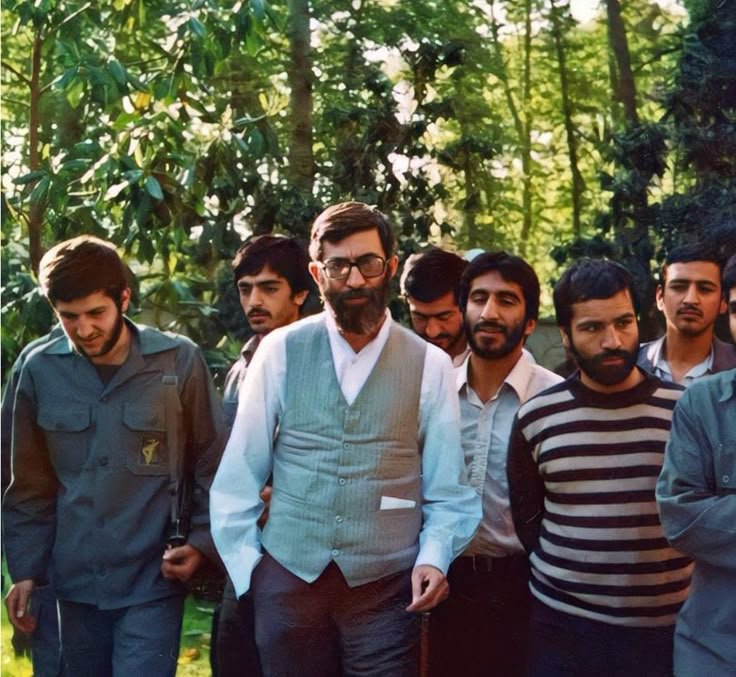
Khamenei’s political activism began in earnest in 1962–63, as Ayatollah Khomeini’s public opposition to the Pahlavi monarchy’s “White Revolution” reform programme crystallized into organized clerical resistance. In May 1963, Khomeini commissioned the then-24-year-old Khamenei to carry a letter to Ayatollah Milani in Mashhad — marking what multiple sources describe as his first formal political contact with Khomeini.
Arrests and Imprisonment
According to Khamenei’s official biography (published on his official website at english.khamenei.ir), the Shah’s intelligence agency SAVAK arrested him six times between 1963 and 1976:
First arrest (1963): While distributing Khomeini’s communications in Birjand, he was detained for one night and banned from public preaching. Shortly afterward, following Khomeini’s arrest on 5 June 1963 and the subsequent 15 Khordad uprising, he was arrested again in Mashhad and held for ten days under harsh conditions.
Subsequent arrests: He was arrested again in January 1964 following his criticism of the Shah’s referendum expanding the White Revolution, leading to approximately two months of solitary confinement in Tehran. He was arrested several further times through the 1960s and 1970s, continuing his activities during periods of freedom by teaching in Mashhad’s religious schools.
Exile (1976–1978): Following his final pre-revolution arrest in December 1974, Khamenei was eventually released and subsequently exiled to the remote southeastern towns of Jiroft and Iranshahr, where he remained until July 1978, approximately six months before the revolution succeeded.
Throughout this period, Khamenei remained in contact with Khomeini, who was himself exiled — first to Turkey and Iraq, and then to France from 1978. He participated in distributing Khomeini’s taped sermons, which were smuggled into Iran, and worked within clerical networks to coordinate opposition to the monarchy.
Intellectual Influences
During his years in Mashhad, Khamenei engaged with political and intellectual circles beyond the purely clerical. Biographer Abbas Milani, as cited in Wikipedia’s Khamenei entry (which cross-references multiple academic sources), has noted Khamenei’s contact with the Movement of God-Worshipping Socialists in Mashhad — a political organization drawing on Islamic socialism and influenced by thinkers including Ali Shariati. This exposure contributed to what analysts have described as Khamenei’s later “Third Worldism” in foreign policy.
He also developed a sustained interest in literary translation. He translated works from Arabic into Persian, including writings by Egyptian political theorist Sayyid Qutb — a translator’s work that reflected his Arabic-language proficiency and his engagement with pan-Islamic political thought.
Role in the Iranian Revolution
On 12 January 1979 — approximately one month before the revolution’s final victory over the Pahlavi monarchy — Ayatollah Khomeini appointed Khamenei to the Revolutionary Council from his exile base in France. Other members appointed to the council included Akbar Hashemi Rafsanjani, Mohammad Beheshti, Morteza Motahhari, and Mohammad Javad Bahonar.
Following Khomeini’s return to Iran on 1 February 1979 and the formal establishment of the Islamic Republic by referendum in March 1979, Khamenei took up the multiple roles assigned to him:
He served as a founding member of the Islamic Republican Party (IRP), established alongside Beheshti, Rafsanjani, Bahonar, and others to consolidate the clerical faction’s political organization. He was appointed deputy minister of defense. He served as supervisor of the Islamic Revolutionary Guard Corps (IRGC) following the outbreak of the Iran-Iraq War in September 1980. On Khomeini’s decree in 1980, he became Tehran’s Friday Prayer Leader — a position he held formally until the end of his leadership, though he rarely exercised it publicly in later decades. He was elected to the Majlis (parliament) as a representative for Tehran in 1980.
His political role during this period was described by Britannica as that of “a fiery orator in support of Khomeini and an ardent advocate of the concept of velayat-e faqih” — the doctrine of governance by the Islamic jurist that forms the constitutional basis of the Islamic Republic.
1981 Assassination Attempt
On 27 June 1981, while delivering a speech at the Abu Zar Mosque in Tehran, Khamenei was critically injured when a bomb concealed in a tape recorder exploded at the venue. The attack was attributed by Iranian authorities to the People’s Mujahedin of Iran (MEK), an opposition organization that had initiated armed conflict against the Islamic Republic after breaking with the Khomeini-led government.
The bomb severely injured Khamenei’s right arm and chest, leaving his right hand partially paralyzed — a condition that affected his physical use of his right arm for the remainder of his life. He was hospitalized for an extended period. He later said: “I won’t need the hand. It would suffice if my brain and tongue work.”
Presidency of Iran (1981–1989)
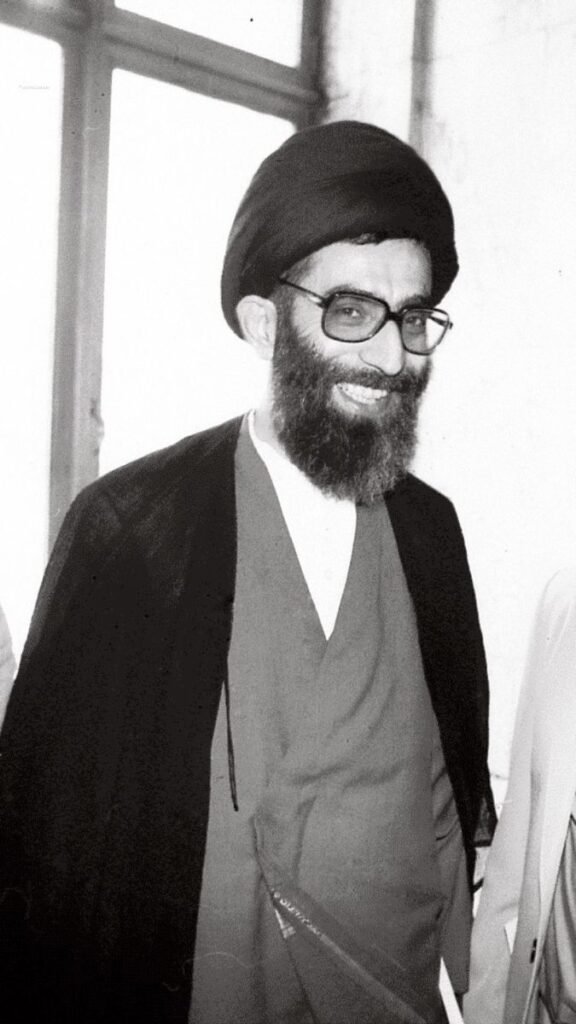
Following the assassination of President Mohammad Ali Rajai and IRP secretary-general Mohammad Javad Bahonar in a separate bombing on 30 August 1981, Khamenei was selected as the IRP’s candidate for the presidency. He won the presidential election on 2 October 1981 and was re-elected in 1985, serving two consecutive four-year terms until 1989.
His presidency coincided almost entirely with the Iran-Iraq War (1980–1988), which had begun under his predecessor. As president, Khamenei served on the Supreme Defense Council and was actively present at the war fronts. The war shaped his political orientation in several ways documented by analysts: the experience of Western material support for Iraqi leader Saddam Hussein during the conflict, including the provision of intelligence and tolerance of chemical weapons use against Iranian soldiers, deepened what observers describe as his enduring distrust of Western governments, particularly the United States.
During his presidency, Khamenei also developed close ties to the Islamic Revolutionary Guard Corps, which was evolving from a revolutionary militia into a major military and eventually economic institution. This relationship with the IRGC would become a defining feature of his subsequent Supreme Leadership.
His presidency is described by Britannica and other sources as having been largely subordinate to the authority of Ayatollah Khomeini as Supreme Leader — a dynamic that reflected the constitutional structure of the Islamic Republic, in which the Supreme Leader holds authority superior to that of the elected president.
On 4 June 1988, one year before his death, Ayatollah Khomeini accepted a ceasefire with Iraq, ending the war. He described accepting the ceasefire as being “more deadly for me than taking poison” — but cited the necessity of preserving the Islamic Republic.
Becoming Supreme Leader (1989)
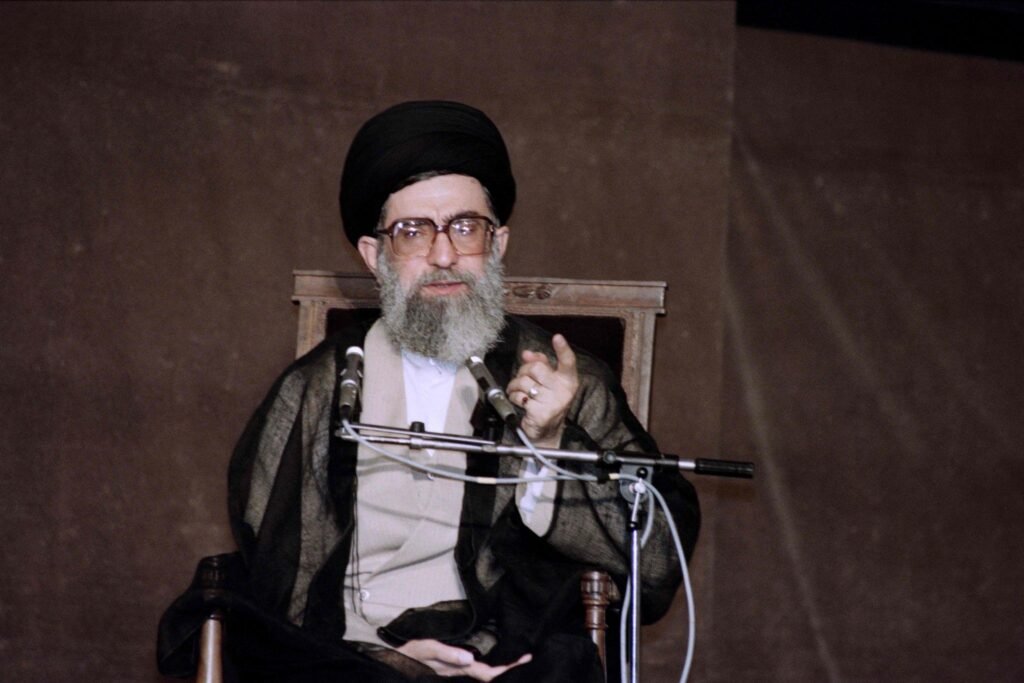
Ayatollah Ruhollah Khomeini died on 3 June 1989, following a period of serious illness. His death created an immediate succession crisis. His previously designated successor, Ayatollah Hossein-Ali Montazeri, had been removed from the position in March 1989 following a public rift with Khomeini over human rights concerns, specifically his criticism of the mass execution of political prisoners in 1988.
The Assembly of Experts — an 88-member body of senior Shia clerics responsible under the constitution for selecting and overseeing the Supreme Leader — convened immediately following Khomeini’s death to select a successor.
Khamenei presented a constitutional problem. The 1979 Constitution of the Islamic Republic required the Supreme Leader to be a marja’ — a grand ayatollah recognized as a “source of emulation” by a significant portion of Shia Muslims, representing the highest formal rank in Shia religious scholarship. Khamenei held only the rank of Hojatoleslam, well below that threshold. During the Assembly’s deliberations, Khamenei himself is documented to have expressed reservations about his qualifications, reportedly stating that one “had to really weep for Islamic society” that he was even being considered.
Khomeini, before his death, had written to the president of the Assembly for Revising the Constitution — which was concurrently in session reviewing constitutional amendments — indicating that the marja’ requirement should be removed from the qualifications for Supreme Leader. The constitutional amendment removing this requirement was adopted, and the Assembly reconfirmed Khamenei’s appointment as Supreme Leader on 4 June 1989.
As described by Britannica: Khamenei was “elevated to supreme leader in 1989 despite lacking formal qualifications.” The Washington Institute for Near East Policy’s obituary analysis notes that “Lacking Khomeini’s charisma and clerical standing, he had developed personal networks, first inside the armed forces and then among the clerics, while administering the major bonyads and seminaries of Qom and Mashhad” — factors cited as explanatory for his selection.
Supreme Leadership: Political Structure and Authority
The Supreme Leader’s powers under the 1979 Constitution (as amended in 1989) are enumerated in Article 110 and include: delineating the general policies of the Islamic Republic; supervising the implementation of those policies; issuing decrees for national referendums; commanding the armed forces; declaring war, peace, and mobilization; appointing, dismissing, and accepting the resignation of senior military officials and commanders; signing the decree formalizing the elected president’s mandate; dismissing the president under specified conditions; resolving disputes between the three branches of government; and appointing, dismissing, and accepting the resignation of the head of the judiciary, members of the Guardian Council, and senior figures in state broadcasting.
Iran’s constitution further grants the Supreme Leader appointment authority over approximately 2,000 representatives across the country’s major institutions, giving the office substantial indirect influence over judicial, legislative, and executive branches simultaneously.
Under Khamenei’s exercise of this authority, multiple presidents of Iran served across his tenure — including Ali Akbar Hashemi Rafsanjani (1989–97), Mohammad Khatami (1997–2005), Mahmoud Ahmadinejad (2005–13), Hassan Rouhani (2013–21), Ebrahim Raisi (2021–24), and Masoud Pezeshkian (2024–2026). His relationship with each was complex, with the Supreme Leader exercising constitutional authority over foreign policy, military affairs, and major economic decisions regardless of which president held office.
Nuclear Policy
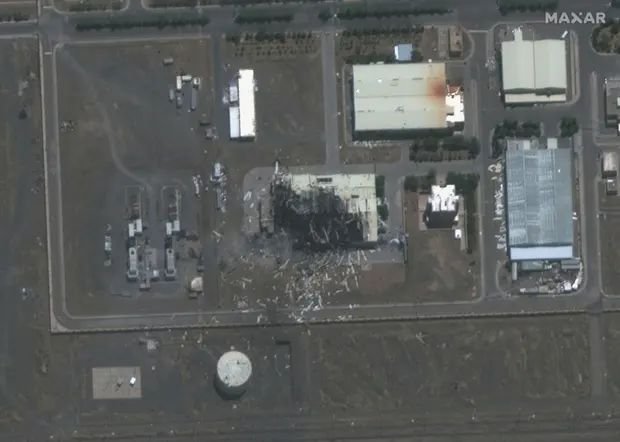
Iran’s nuclear program was one of the defining foreign policy issues of Khamenei’s tenure as Supreme Leader.
Khamenei consistently maintained, in public statements and official positions, that Iran’s nuclear program was intended for civilian energy purposes and that the production of nuclear weapons was forbidden under Islamic law. He issued a fatwa (a binding religious ruling) declaring the production of weapons of mass destruction to be prohibited, though Western governments disputed whether this fatwa represented a binding operational constraint on Iran’s nuclear activities.
The nuclear program became the subject of sustained international negotiations under multiple UN Security Council resolutions and, eventually, the Joint Comprehensive Plan of Action (JCPOA), formally agreed in July 2015 between Iran, the United States, the United Kingdom, France, Germany, Russia, and China. The JCPOA imposed significant restrictions on Iran’s nuclear activities in exchange for the lifting of international economic sanctions. Khamenei described his agreement to the JCPOA as an exercise of “heroic flexibility” — a phrase he used to signal tactical pragmatism within a framework he presented as preserving Iran’s sovereign rights.
In May 2018, President Donald Trump announced that the United States would withdraw from the JCPOA and reimpose sanctions on Iran. Khamenei responded by authorizing Iran to resume some nuclear activities suspended under the agreement. He cited the US withdrawal as confirmation of his longstanding position that the United States was an unreliable negotiating partner. Subsequent years saw Iran’s uranium enrichment levels rise substantially, drawing increasing concern from the International Atomic Energy Agency (IAEA) and Western governments.
Regional Policy and Foreign Relations
Relations with the United States
Khamenei’s foreign policy was consistently characterized by hostility toward the United States, which he referred to in public speeches as “the Great Satan” — a term originating with Ayatollah Khomeini. He refused to authorize formal diplomatic relations between the two countries throughout his tenure, though back-channel negotiations on specific issues occurred at various points.
The Iran hostage crisis (1979–81), the US support for Iraq during the Iran-Iraq War, the 1988 downing of Iran Air Flight 655 by a US warship (killing 290 passengers), the withdrawal from the JCPOA in 2018, and subsequent “maximum pressure” sanctions campaigns under both the Trump and Biden administrations formed the documented sequence of events that Khamenei cited in public speeches as evidence of US hostility.
Relations with Israel
Khamenei’s public position on Israel was one of consistent opposition, including repeated calls in public speeches for what he described as an end to Israeli governance over Palestinian territories. His rhetoric included statements that human rights groups and governments characterized as antisemitic, and Western governments designated as incitement. Iran under Khamenei provided documented financial and material support to Hamas in Gaza, Hezbollah in Lebanon, and other armed organizations operating against Israel — a policy the Iranian government described as support for Palestinian resistance and which Western governments designated as state sponsorship of terrorism.
Direct military confrontations between Iran and Israel escalated in the final years of Khamenei’s tenure. Israeli airstrikes on Iranian-linked targets in Syria prompted Iranian missile and drone attacks. In April 2024, following an Israeli airstrike on the Iranian consulate in Damascus, Iran launched its first direct attack on Israeli territory — a large barrage of missiles and drones that was largely intercepted. A second Iranian missile attack followed in October 2024.
The Twelve-Day War (June 2025)
In June 2025, Israel launched a 12-day military campaign involving strikes on Iranian territory, targeting Iranian nuclear facilities and Islamic Revolutionary Guard Corps leadership. The United States participated briefly. The strikes significantly degraded Iran’s nuclear infrastructure and IRGC command structure, according to reporting from Britannica, Reuters, and The Irish Times. Iran retaliated with missile strikes against Israel and US military bases in the region.
Relations with Russia and China
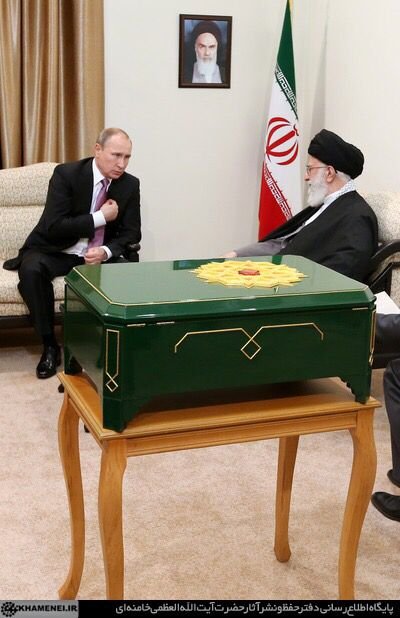
Khamenei cultivated relationships with Russia and China as counterweights to Western pressure. Under his leadership, Iran deepened economic and military cooperation with Russia, particularly following Russia’s February 2022 invasion of Ukraine, with multiple sources reporting that Iran supplied Russia with drones used in the Ukrainian conflict. Relations with China focused on economic ties, with a 25-year cooperation agreement signed in 2021.
Regional Influence
The Council on Foreign Relations and other analytical organizations documented that under Khamenei, Iran established and sustained support for armed groups across the region — including Hezbollah in Lebanon, Hamas in Gaza, the Houthi movement in Yemen, and various militia organizations in Iraq and Syria. Iranian officials described this network as an “Axis of Resistance” against US and Israeli influence; critics described it as a network of proxy forces serving Iranian geopolitical interests.
Domestic Protests and Human Rights
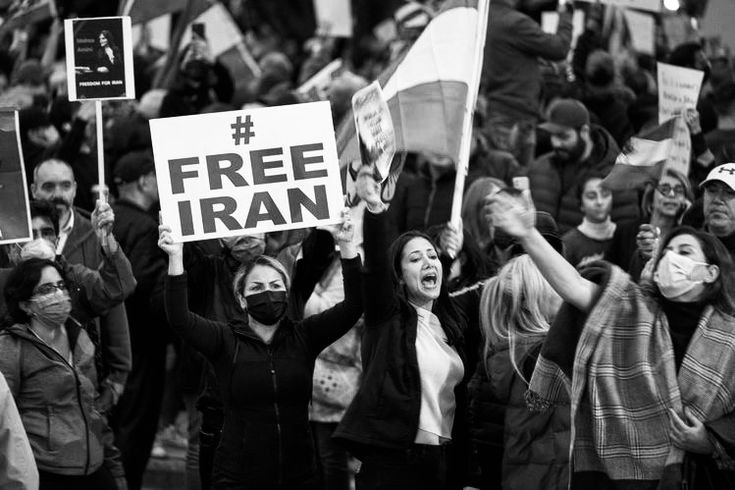
Khamenei’s Supreme Leadership was marked by multiple significant domestic protest movements, which were suppressed by Iran’s security forces. The human rights dimensions of these events were documented by United Nations human rights bodies and international human rights organizations.
1999 student protests: Following the closure of the reformist newspaper Salam, university students protested across Iran. Security forces and vigilante groups responded with violence. Khamenei publicly aligned himself against the protest movement.
Green Movement (2009): Following the disputed presidential election won by Mahmoud Ahmadinejad over Mir-Hossein Mousavi, millions of Iranians took to the streets in the largest domestic protests since the revolution. Protesters wore green and carried signs reading “Where is my vote?” Khamenei publicly endorsed Ahmadinejad’s victory, calling it a “divine assessment,” and authorized a security response that resulted in deaths, mass arrests, and torture in detention, as documented by Amnesty International and Human Rights Watch.
2017 and 2019 protests: Economic grievances, including rising prices and unemployment, drove further waves of protest. The November 2019 protests, following the government’s sudden announcement of gasoline price rises, were suppressed with particular severity. Reuters reported that approximately 1,500 people were killed in the crackdown, though Iranian authorities disputed this figure.
2022 “Woman, Life, Freedom” protests: Following the death in morality police custody of Mahsa Amini, a 22-year-old Kurdish-Iranian woman, in September 2022, widespread protests erupted across Iran under the slogan “Woman, Life, Freedom” (Zan, Zendegi, Azadi in Persian). The UN Human Rights Council established a fact-finding mission, which in 2023 concluded that Iran had committed crimes against humanity in its response to the protests, including unlawful killings, torture, and enforced disappearances.
2025–26 protests: Protests broke out in late 2025 amid severe economic deterioration — depleted hard currency reserves, soaring inflation, and the economic impact of intensified sanctions. According to a Time magazine report published in March 2026, senior health officials estimated that security forces killed approximately 30,000 people during the crackdown ordered by Khamenei. EBSCO Research’s summary, drawing on available reporting at the time, placed estimates at upward of 10,000 deaths. These figures were disputed by Iranian authorities, who attributed casualties to foreign interference. The protests ended in late January 2026.
Political Philosophy: Velayat-e Faqih
The constitutional and ideological basis of Khamenei’s authority as Supreme Leader was the doctrine of velayat-e faqih — Guardianship of the Islamic Jurist — developed and articulated by Ayatollah Khomeini and formalized in Iran’s 1979 constitution.
Under this doctrine, supreme political authority in an Islamic state should rest with the senior qualified Islamic jurist — the faqih — who acts as the guardian of the Islamic legal order in the absence of the twelfth imam (in Twelver Shia belief, the Hidden Imam whose return marks the end times). The Supreme Leader holds this guardianship role and exercises ultimate authority over the state in its name.
Khamenei was an active proponent of velayat-e faqih throughout his career. His official speeches and published writings are substantially concerned with elaborating and defending this doctrine against both secular critics and religious scholars within the Shia tradition who questioned whether it had legitimate classical precedent. Some prominent Shia scholars, including Ayatollah Montazeri (before his house arrest) and clerics based in Najaf, have publicly questioned aspects of the doctrine.
Books and Publications
Khamenei’s published works fall into several categories, as documented by multiple sources including his official website and the Washington Institute for Near East Policy’s assessment.
Translations: He translated several works from Arabic into Persian, including writings by the Egyptian political theorist Sayyid Qutb. This translating activity predates the revolution and reflects his Arabic language proficiency.
Religious writings: He authored works on Islamic jurisprudence and legal methodology. His official website lists various texts related to Islamic governance and religious scholarship.
Compiled speeches and messages: A major institutional corpus of his public statements, speeches, and messages was collected and published by the Office for the Preservation and Publication of the Works of Ayatollah Khamenei. According to a product entry cited in Wikipedia’s Khamenei article for the compilation Hadith-e Velayat (A Collection of the Statements and Messages of the Supreme Leader), this series alone comprises 121 book titles in 208 volumes, covering materials from 1979 to 2020.
His official website (english.khamenei.ir) and related institutions published his works in Persian, Arabic, and other languages across his tenure as Supreme Leader.
Family and Personal Life
Khamenei married Mansoureh Khojasteh Bagherzadeh. The couple had at least six children. Their second eldest son, Mojtaba Khamenei, became politically and religiously influential and had long been identified by analysts as a potential successor. Following his father’s death on 28 February 2026, Mojtaba Khamenei was elected Supreme Leader by the Assembly of Experts on 8 March 2026.
Mansoureh Khojasteh Bagherzadeh was injured in the same military strike that killed her husband on 28 February 2026. She died from her injuries on 2 March 2026, as reported by Britannica and Grokipedia, citing available sources.
Khamenei was fluent in Persian (his primary language), Azerbaijani (reflecting his father’s ethnic background), and Arabic (required for advanced Shia scholarship). He was noted in multiple sources as having been a gifted orator in Persian, a quality that served him in his roles as Friday Prayer Leader, political speaker, and public communicator throughout his career.
Health
In September 2014, Iranian state media reported that Khamenei had undergone successful prostate surgery. Limited details were provided. Reports in various media speculated about additional underlying conditions, though these remained unconfirmed by official sources. From approximately 2023 onward, public appearances became less frequent, and observers noted reduced mobility. After the Israeli and US strikes of June 2025, he curtailed public appearances significantly, emerging primarily for staged defiant speeches. A Time magazine investigation published in March 2026 reported that he spent extended periods in an underground bunker beneath his compound in central Tehran, with one visitor reportedly timing the elevator descent at more than five minutes.
Controversies
Because of Khamenei’s position as a major political figure, his tenure was the subject of criticism from multiple directions. This section presents documented controversies with attribution, in accordance with editorial standards requiring that disputed claims be attributed rather than asserted.
Human Rights
The United Nations Human Rights Council’s fact-finding mission concluded in 2023 that Iran had committed crimes against humanity during the crackdown on the 2022 protests. Human Rights Watch, Amnesty International, and multiple UN Special Rapporteurs documented killings of protesters, torture in detention, executions of individuals convicted in summary proceedings, and systematic restrictions on freedoms of assembly, expression, and the press across Khamenei’s tenure. Iranian authorities disputed characterizations of their actions as violations of international law, describing security responses as necessary to counter foreign interference and internal disorder.
Mass Executions of 1988
The mass execution of political prisoners in the summer and autumn of 1988 — carried out on orders of Ayatollah Khomeini — became a subject of documented controversy and scholarly analysis. Amnesty International estimated that between 4,000 and 5,000 prisoners were killed; some Iranian dissidents’ organizations placed the figure higher. Khamenei’s specific role in those events remains the subject of historical debate, though multiple sources note that it was partly Ayatollah Montazeri’s public opposition to the executions that led to his removal as Khomeini’s designated successor — a process in which Khamenei, as a close Khomeini associate, was a participant.
Disputed Election (2009)
The 2009 presidential election and its aftermath was one of the most significant domestic political controversies of Khamenei’s tenure. The official result declaring Mahmoud Ahmadinejad the winner was disputed by millions of Iranians and both opposition candidates. Khamenei publicly endorsed the official result and authorized a security response. International observers and human rights organizations documented the subsequent crackdown; Iranian authorities maintained that the election result was legitimate and that protests were encouraged by foreign powers.
International Sanctions
The United States, the European Union, and other governments imposed successive rounds of sanctions against Iran and individuals associated with its government, including the Supreme Leader’s Office, the IRGC, and affiliated entities, throughout Khamenei’s tenure. The stated grounds included Iran’s nuclear program, support for designated terrorist organizations, and human rights violations. Iranian authorities characterized sanctions as forms of economic warfare designed to pressure the Iranian population.
Death and Succession
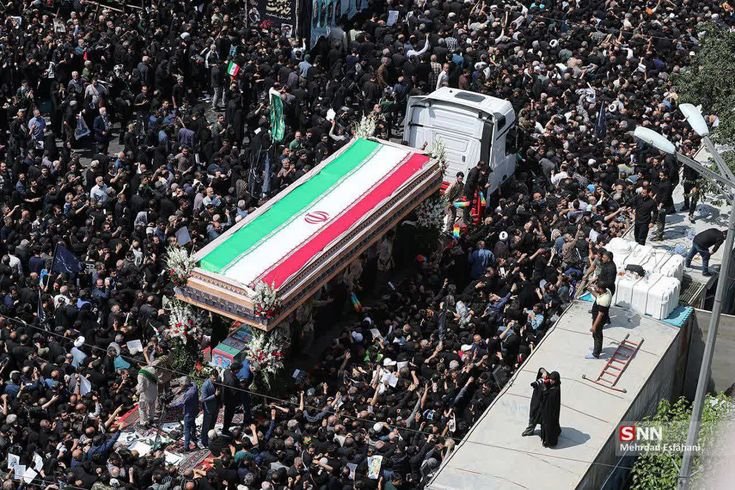
On 28 February 2026, the United States and Israel launched a coordinated military assault on Iran. Britannica describes the context: with “Khamenei’s regime significantly weakened economically, militarily, and politically” following the 2025–26 domestic protests and the Twelve-Day War of June 2025, the US and Israel launched the operation. Khamenei was killed in the opening stages of the attack, at age 86. Time magazine reported that US President Trump had stated Khamenei and other Iranian officials “couldn’t escape US intelligence and the advanced tracking systems.”
Khamenei’s wife, Mansoureh Khojasteh Bagherzadeh, was injured in the same strike and died on 2 March 2026 from her injuries.
Following Article 111 of Iran’s constitution, a Provisional Leadership Council consisting of President Masoud Pezeshkian, Chief Justice Gholam-Hossein Mohseni-Eje’i, and Alireza Arafi of the Guardian Council assumed Khamenei’s role pending election of a successor.
On 8 March 2026, the Assembly of Experts elected Mojtaba Khamenei, Khamenei’s second eldest son, as the third Supreme Leader of Iran. Wikipedia’s article on the Supreme Leader of Iran notes that Mojtaba “had been groomed for decades to take the reins.”
Khamenei’s state funeral was delayed by the ongoing conflict. According to Britannica and the Associated Press, the funeral commenced on 3 July 2026, with his body to be transported across Iran and Iraq before burial at the Imam Reza shrine in Mashhad — the city of his birth.
Historical Assessment and Influence
The assessment of Khamenei’s historical significance varies substantially depending on source and perspective. This section presents documented analytical perspectives without adopting any as the biography’s own position.
Britannica describes Khamenei as having “played a pivotal role in both the militarization of the Iranian state and the consolidation of near-absolute authority in the Office of the Supreme Leader” and identifies the elevation of the Islamic Revolutionary Guard Corps as a defining institutional change of his tenure, noting that it “weakened traditional pillars of Iranian society, such as the clergy and the business community embodied in the bazaar.”
Time magazine’s obituary described him as having “transform[ed] the Islamic Republic into a de facto military dictatorship.” This characterization reflects the editorial perspective of that publication; Iranian authorities and aligned observers would characterize the Islamic Republic’s governance differently.
The Irish Times’ obituary noted: “Survival of the Islamic Republic remained his overriding priority” and observed that at his death, “his principal loyal force was the Guards, while many social and political factions had become alienated and the economy lay shattered.”
The Washington Institute’s obituary analysis noted that “a country that had begged others for missiles to fight Iraq in the 1980s now produced its own long-range missiles” — framing this as one measure of the transformation of Iran’s military capacity under his tenure.
His 36-year tenure as Supreme Leader was longer than that of any other head of state in West Asia at the time of his death, and longer than the reign of Mohammad Reza Shah. He was 50 when he assumed the office and 86 at the time of his death.
Career Timeline
| Year | Event |
| 1939 | Born 19 April in Mashhad, Khorasan Province |
| 1943 | Begins religious studies in traditional maktab |
| ~1952 | Attends speech by Navvab Safavi; later describes it as first awakening of revolutionary consciousness |
| 1957 | Briefly studies in Najaf seminary; returns to Mashhad |
| 1958 | Relocates to Qom seminary; studies under Borujerdi and Khomeini |
| 1963 | First arrest in Birjand while distributing Khomeini’s communications; arrested again following June uprising |
| 1963–1976 | Arrested six times total by SAVAK; exiled 1976–1978 |
| January 1979 | Appointed by Khomeini to Revolutionary Council |
| April 1979 | Islamic Republic formally established |
| 1980 | Becomes Tehran Friday Prayer Leader; elected to Majlis; appointed deputy minister of defense |
| June 1981 | Survives assassination attempt at Abu Zar Mosque; right arm permanently injured |
| October 1981 | Elected President of Iran following assassination of Rajai |
| 1981–1989 | Serves two terms as president during Iran-Iraq War |
| June 1989 | Ayatollah Khomeini dies; Khamenei elected Supreme Leader by Assembly of Experts; constitutional amendment removes marja’ requirement |
| 1997 | Mohammad Khatami elected president on reform platform; relationship with Supreme Leader’s office defines subsequent reform debates |
| 2005 | Mahmoud Ahmadinejad elected president; IRGC role expands significantly |
| 2009 | Green Movement protests following disputed election; Khamenei endorses official result; security crackdown |
| July 2015 | JCPOA nuclear agreement signed |
| May 2018 | US withdraws from JCPOA; Khamenei authorizes resumption of nuclear activities |
| 2022 | “Woman, Life, Freedom” protests following death of Mahsa Amini; UN finds crimes against humanity committed during crackdown |
| October 2024 | Iran launches first-ever direct missile attack on Israeli territory in response to Israeli strikes |
| June 2025 | Twelve-Day War with Israel and brief US participation; Iranian nuclear facilities and IRGC leadership significantly degraded |
| Late 2025 | Severe economic deterioration; mass protests; estimated thousands killed in crackdown |
| 28 February 2026 | Killed in US-Israeli military strike on Iran |
| 2 March 2026 | Wife Mansoureh Khojasteh Bagherzadeh dies from injuries sustained in same strike |
| 8 March 2026 | Son Mojtaba Khamenei elected third Supreme Leader by Assembly of Experts |
| 3 July 2026 | State funeral commences |
FAQ Section
Q: Who was Ali Khamenei? Ali Hosseini Khamenei (1939–2026) was a Shia cleric and politician who served as the second Supreme Leader of the Islamic Republic of Iran from 1989 until his assassination in February 2026. He previously served as Iran’s third president from 1981 to 1989. His 36-year tenure as Supreme Leader was the longest of any head of state in West Asia at the time of his death.
Q: How old was Ali Khamenei when he died? Khamenei was 86 years old at the time of his death on 28 February 2026. He was born on 19 April 1939.
Q: When did Ali Khamenei become Supreme Leader? Khamenei was elected Supreme Leader by the Assembly of Experts on 4 June 1989, the day after the death of Ayatollah Ruhollah Khomeini, whom he succeeded in the role.
Q: What are the constitutional powers of Iran’s Supreme Leader? Under Article 110 of Iran’s constitution, the Supreme Leader’s powers include delineating the general policies of the Islamic Republic, commanding the armed forces, declaring war and peace, appointing the head of the judiciary and members of the Guardian Council, signing the decree formalizing the elected president’s mandate, and dismissing the president under specified conditions. The Supreme Leader also has appointment authority over approximately 2,000 representatives across major Iranian institutions.
Q: Was Ali Khamenei ever President of Iran? Yes. Khamenei served as the third President of Iran from 1981 to 1989, across two consecutive terms. He was elected following the assassination of President Mohammad Ali Rajai.
Q: Why was Khamenei selected as Supreme Leader despite being a lower-ranking cleric? The 1979 constitution required the Supreme Leader to hold the rank of marja’ (grand ayatollah). Khamenei, a Hojatoleslam, did not meet this requirement. Ayatollah Khomeini wrote to the Assembly for Revising the Constitution before his death indicating the marja’ requirement should be removed. The constitutional amendment was adopted, permitting Khamenei’s selection.
Q: What is velayat-e faqih? Velayat-e faqih (Guardianship of the Islamic Jurist) is the doctrine holding that supreme political authority in an Islamic state should rest with the senior qualified Islamic jurist, who acts as guardian in the absence of the twelfth imam. Developed and articulated by Ayatollah Khomeini, it forms the constitutional foundation of the Islamic Republic of Iran and the basis for the Supreme Leader’s authority.
Q: How did Khamenei die? Khamenei was killed on 28 February 2026 during a coordinated military strike by the United States and Israel on Iran. Multiple verified sources including Britannica, Reuters, AP, The Irish Times, and Time magazine confirmed his death in the opening stage of the military operation. His wife, Mansoureh Khojasteh Bagherzadeh, died from her injuries in the same attack on 2 March 2026.
Q: Who succeeded Khamenei as Supreme Leader? Mojtaba Khamenei, Ali Khamenei’s second eldest son, was elected by the Assembly of Experts as the third Supreme Leader of the Islamic Republic of Iran on 8 March 2026.
Q: What books did Ali Khamenei write? Khamenei’s published works include religious texts on Islamic jurisprudence, translations from Arabic into Persian (including works by Sayyid Qutb), and an extensive corpus of compiled speeches and messages published by the Office for the Preservation and Publication of the Works of Ayatollah Khamenei. That compilation alone comprises 121 book titles in 208 volumes covering materials from 1979 to 2020, according to available institutional documentation.
Q: What was Khamenei’s position on Iran’s nuclear program? Khamenei consistently maintained that Iran’s nuclear program was for civilian energy purposes and issued a fatwa declaring nuclear weapons production to be forbidden under Islamic law. He supported the 2015 JCPOA nuclear agreement, describing his agreement as “heroic flexibility,” and responded to the US withdrawal from the deal in 2018 by authorizing Iran to resume nuclear activities. Western governments disputed whether his stated positions reflected operational constraints on Iran’s nuclear activities.
Q: What domestic protests occurred under Khamenei’s leadership? Major protest movements under Khamenei’s leadership included the 1999 student protests, the 2009 Green Movement (following the disputed presidential election), protests in 2017 and 2019, the 2022 “Woman, Life, Freedom” protests following the death of Mahsa Amini in morality police custody, and protests in 2025–26. The UN Human Rights Council found that Iran committed crimes against humanity in suppressing the 2022 protests. Iranian authorities consistently characterized protest movements as foreign-influenced attempts to destabilize the Islamic Republic.
Q: What was the relationship between Khamenei and the IRGC? Khamenei developed close ties with the Islamic Revolutionary Guard Corps during the Iran-Iraq War while serving as president. As Supreme Leader, he encouraged the IRGC’s expanded role in politics, the economy, and regional affairs — a shift that analysts note represented a departure from Khomeini’s original policy of keeping the IRGC out of politics. The IRGC became the principal institution sustaining the Islamic Republic in the final decades of Khamenei’s leadership, at the expense of other traditional pillars of Iranian society, according to multiple analytical assessments including The Irish Times’ obituary.
Q: What was Iran’s financial situation described as at the time of Khamenei’s death? Multiple sources including Britannica, The Irish Times, and Time described Iran’s economy as severely deteriorated at the time of Khamenei’s death, with depleted hard currency reserves, soaring inflation, and the accumulated effects of international economic sanctions. This economic deterioration was cited as a contributing factor to the mass domestic protests of 2025–26.