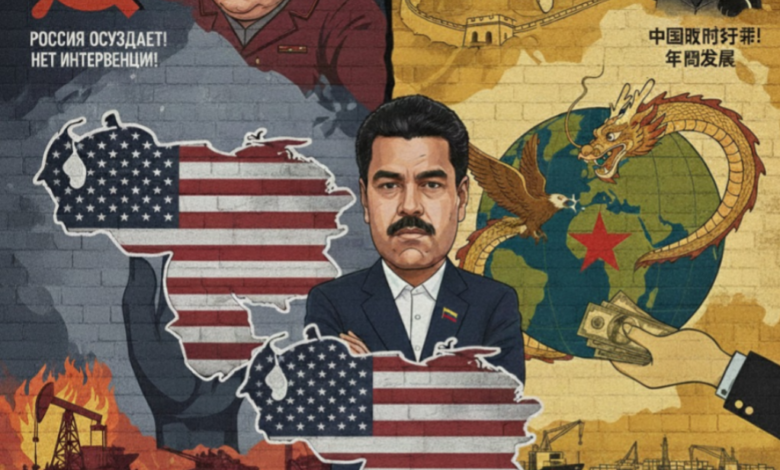
International Reaction to U.S. Intervention in Venezuela — Focus on Russia and China: The political environment of Latin America is nothing but closely observed by the world powers due to the resources, position, and energy markets. Venezuela is counted among the oil-rich countries facing political and economic instabilities in the past several years. On this backdrop, the reality or possibility of U.S. intervention in Venezuela has evinced various responses from the world at large, particularly from two major actors: Russia and China.
In this article, we will analyze with detail the international reaction to Venezuelan affairs with a focus on US participation and what implications this has for global politics. These implications involve Russian and Chinese politics. Read More..
Background: U.S. Intervention in Venezuela
The USA has traditionally exercised strong influence in Latin America, mentioning inter alia democracy, human rights, and regional security. In Venezuela, the tension in the past ten years has been fueled by the following reasons:
- Political instability and elections in contention
- Economic collapse & Hyperinflation
- Humanitarian crises and mass migration
- Sanctions against Venezuelan authorities and public sector companies imposed by the United States
U.S. military involvement, whether through striking, backing opposition forces, or a show of force, has been seen to be a possible escalation that could end up destabilizing this region. This has been seen to draw immediate attention from world politics.
Russia’s Reaction
Russia has traditionally enjoyed strong links with Venezuela, tracing its roots back in involved oil contracts and arms sales. The response of the Kremlin on U.S. interference can therefore be outlined in the following ways:
1. Diplomatic Condemnation
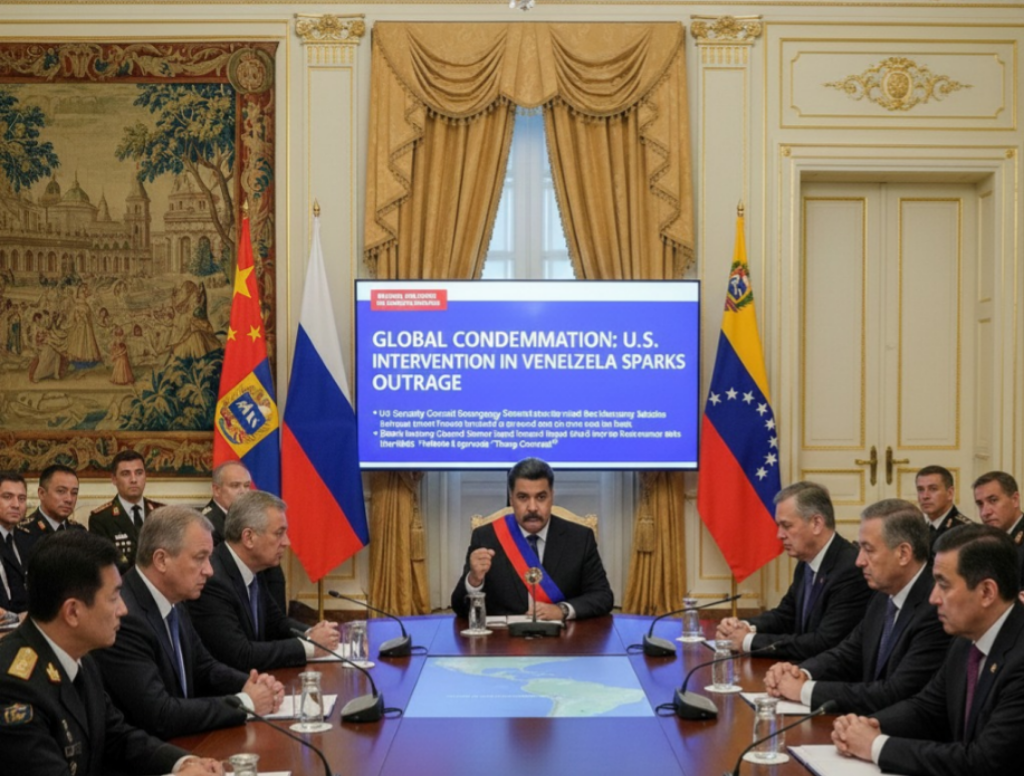
Russia has strongly disapproved of the U.S. intervention in Venezuela and announced this intervention to be an infringement of international law and the sovereignty of Venezuela. The officials of Russia made an appeal through the United Nations to respect the independence of Venezuela.
2. Military Support
Russia has been providing military assistance to Venezuela. This may include cutting-edge defense systems and military training for Venezuelan military forces. The threat of a U.S. attack may further induce Russia to enhance military cooperation efforts.
3. Strategic Messaging
Russia often takes on a proactive policy position against the hegemony of the United States. Through a policy of opposition to “interventionism” in Venezuela, Russia promotes its reputation as a defender of state sovereignty internationally and undermines U.S. preeminence in the Western Hemisphere. This policy position is extremely relevant and representative in Russia’s domestic politics. It is a manifestation of power or prestige.
4. Economic Interests
It has financial investments as well as oil and gas exploration projects there in Venezuela. The intervention by the U.S. poses a threat to such investments, which pushes Russia to safeguard its investments by supporting the Venezuelan government.
China’s Reaction
Like in Russia, China’s engagement in Venezuela is also driven by its strategic interests. China has been facing a dilemma in Venezuela due to its political instability. Now, China’s re-escalation of its position in Venezuela has been based on its own national interest.
1. Diplomatic Statements
The Chinese government has appealed to the differing parties to resolve the Venezuelan crisis in a peaceful manner and in a way that recognizes the sovereignty of the Venezuelan State. The Chinese government has further reminded the USA that the Venezuelan crisis can actually increase further if the USA resorts to military intervention in the crisis.
2. Economic Considerations
While Venezuela has heavily invested in loans from Chinese firms, as well as infrastructure and oil swaps, American military involvement jeopardizes their ability to repay their loans. So, besides its own stand on international relations, Chinese interests are at stake in terms of protecting its huge investment in Venezuela.
3. Strategic Positioning
The opposition of China to U.S. intervention in Venezuela is consistent with China’s foreign policy strategy to counter the influences of the U.S. all over the world. As a means of upholding Venezuelan sovereignty, this action by China confirms that it is a supporter of the principle of non-intervention as a global power.
4. Balancing Relations
Although it opposes military intervention in the conflict, the Chinese government maintains its diplomacy with the U.S. to prevent a direct conflict. The Chinese government usually supports international approaches to the conflict through institutions such as the United Nations.
Potential Implications of Russia and China’s Reactions
The responses of Russia and China to U.S. intervention in Venezuela have significant regional and global consequences:
1. Regional Tensions
Engagement by Great Powers could increase tensions in Latin America. This is because such engagement might have repercussions on the policies of other neighboring nations. Countries such as Colombia or Brazil could find themselves put under pressure to choose sides.
2. Geopolitical Rivalry
The involvement of the U.S. and the responses of both Russia and Chinese societies may add to the already existing level of global geopolitical rivalries and competition. The region of Latin America might become a battlespace for proxy warfare and overt military and economic aggression on the part of all involved parties.
3. Economic Consequences
Military intervention poses risks of upsetting oil output in Venezuela, and any resultant effects on worldwide energy markets. Other potential measures of Russian and Chinese opposition involve increasing oil exports, touting financial influence, or coordinating with other nations to mitigate any ramifications.
4. International Norms and Diplomacy
This places the sovereignty, international law, and negotiation concepts in a very difficult balancing act. The way the US, Russia, and China handle the situation does have the potential to set future guidelines in similar incidents taking place around the world.
Humanitarian and Economic Considerations
- Humanitarian assistance and support: Both nations could extend more humanitarian support to Venezuela, focusing on relief and reconstruction rather than conflict.
- Economic stability: Protecting investments as well as trading relations is of importance. Escalation of the conflict might lead to undervaluation of Venezuelan assets as well as undermine trading agreements.
- Migration: Military attacks might aggravate the migration crisis, which will include regional implications for the labor market and social institutions.
Conclusion
The international community’s reaction to the interference of the U.S. in Venezuela, especially its targeting of Russia and China, basically shows how complex world geopolitics are today. On military issues, questions relating to sovereignty, military aid on strategic grounds, or having adequate protection for economic interests-Russia and China are against U.S. interference in Venezuela.
It is important to understand such dynamics in order to assess the implications and risk involved in intervention. The specific case at hand highlights a situation in which local disturbance and global strategic politics dynamics highlight.
Venezuela, in its efforts to solve its internal crises, is soon to meet a critical juncture at which the stands of Russia and, in particular, China would remain the decisive factor for Venezuela’s destiny.