
MrBeast, whose real name is Jimmy Donaldson, has transformed online entertainment through record-breaking challenges, massive giveaways, and innovative business ventures. His journey from a young YouTube enthusiast to the world’s biggest creator is a story of creativity, persistence, and relentless ambition. Today, he is not only the most-subscribed individual YouTuber but also a successful entrepreneur, philanthropist, and global internet icon.
This complete biography explores every stage of his remarkable career, beginning with his Early Life and Family, followed by his Beginning on YouTube and the Viral Breakthrough that changed his life forever. It also examines how he became YouTube’s Biggest Creator, his global charity campaigns through Team Trees & Team Seas, and his expanding Business Ventures, including MrBeast Burger, Feastables, and the record-breaking Beast Games.
In addition, this article covers MrBeast’s Net Worth, Awards and Recognition, and Family and Personal Life, providing a comprehensive look at the achievements, challenges, and lasting influence of one of the most successful digital creators in history.
Beginning on YouTube
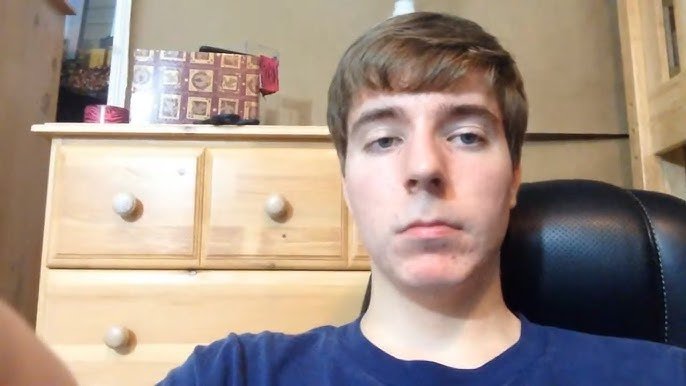
Donaldson created his first YouTube channel, initially named “MrBeast6000,” on February 19, 2012, at the age of 13, uploading his first video the following day. The channel name originated from a random Xbox gamertag that had been automatically generated for him years earlier; when he began posting videos, he kept the “MrBeast” portion and eventually dropped the “6000.”
His earliest content bore little resemblance to the elaborate productions that would later define his career. Donaldson’s first videos were largely gaming commentary and “Let’s Play”-style content, common among aspiring YouTubers at the time. Over the following several years, he experimented extensively with different formats, most notably a recurring series called “Worst Intros,” and a range of videos analyzing other YouTubers’ estimated earnings — an early sign of his fascination with the mechanics of the platform itself rather than simply the content on it.
Rather than treating YouTube as a casual hobby, Donaldson approached it methodically, studying audience retention graphs, click-through rates on thumbnails, and video pacing with an intensity closer to a data analyst than a typical teenage vlogger. This period, which lasted roughly five years with minimal audience growth or income, is frequently cited by Donaldson himself as foundational: it gave him space to fail repeatedly and iterate on ideas without the pressure of a large existing audience, a luxury few creators who found fame later in the platform’s history were able to replicate.
During these early years, Donaldson supplemented his limited YouTube earnings with other income sources, including reselling items and, by some accounts, trading in cryptocurrency and online marketplaces, using the proceeds to fund better recording equipment and, eventually, his first modest video budgets. He has described binge-watching hours of top-performing videos across genres during this period, breaking down their structure, pacing, and thumbnail choices in an effort to reverse-engineer the underlying patterns behind what made content spread. Former classmates and early online collaborators have recalled Donaldson organizing his video ideas and posting schedule with spreadsheets and structured plans well before his channel had any meaningful audience to justify that level of rigor — a habit that distinguished his approach from most of his hobbyist peers and that he has continued to apply, at a vastly larger scale, throughout his subsequent career.
Viral Breakthrough
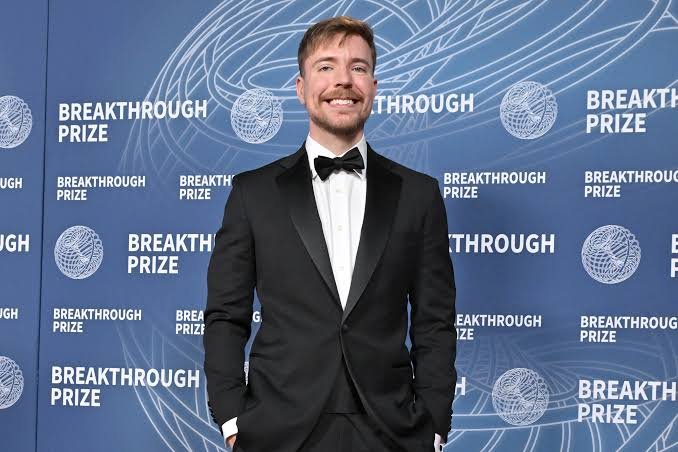
Donaldson’s channel began attracting wider attention in January 2017 with a video titled “Counting to 100,000,” a more-than-40-hour marathon in which he simply counted aloud on camera. While seemingly simple, the video’s premise captured attention for its sheer absurdity and commitment, and it marked a turning point in both his subscriber growth and his understanding of what kind of content resonated with a mass audience: extreme commitment to a single, easily understandable concept.
Building on that momentum, Donaldson began producing a rapid succession of endurance and stunt-based videos — tipping worker at fast food after ordering nothing, ordering the most expensive item on various menus, and other unconventional challenges — that continued to drive subscriber growth throughout 2017. As his audience and advertising revenue grew, Donaldson made a decision that would come to define his career: rather than personally profiting from his increased earnings, he reinvested nearly all of it directly back into producing bigger and more expensive videos, a strategy he has described in numerous interviews as central to his long-term growth philosophy. This reinvestment-first approach also extended to team-building, as Donaldson began hiring childhood friends and collaborators — including longtime collaborators Chris Tyson, Chandler Hallow, and Karl Jacobs — to help produce increasingly ambitious content, forming the nucleus of what would eventually grow into a large production company.
The years immediately following his 2017 breakthrough were marked by rapid, almost continuous escalation in video budgets and ambition. Where early viral videos had cost little beyond Donaldson’s own time, subsequent projects began to incorporate rented equipment, paid participants, and increasingly elaborate physical builds, funded almost entirely by advertising revenue from the previous batch of videos. This created a self-reinforcing cycle: larger, more expensive videos drove greater viewership and subscriber growth, which in turn generated more advertising revenue to fund the next round of even larger productions. Donaldson has described this period as financially precarious despite the channel’s rapid growth, noting that because virtually all revenue was immediately reinvested, the operation carried little financial cushion, and a significant drop in viewership at any point could have jeopardized the entire enterprise — a risk he has said he accepted deliberately as part of a calculated long-term growth strategy rather than short-term profit-taking.
Becoming YouTube’s Biggest Creator
Over the following several years, MrBeast’s content evolved from relatively low-budget stunts into elaborately produced, cinematically shot spectacles, incorporating massive cash giveaways, large-scale survival competitions, and expensive real-world set pieces. Videos recreating the Netflix series Squid Game with hundreds of real participants, recreations of popular game shows with vastly inflated prizes, and survival challenges filmed in remote or extreme locations became hallmarks of his channel, with individual video budgets eventually running into the millions of dollars.
This scale required a fundamental shift in how Donaldson operated: what began as a one-person channel evolved into a full production studio, employing camera operators, editors, logistics coordinators, and full-time creative staff, all coordinated to produce content at a pace and quality level far beyond what most individual creators could sustain. Donaldson has described adopting principles from traditional film and television production, alongside data-driven digital marketing techniques, to manage this scale — a hybrid approach that few competitors have been able to fully replicate.
Team Trees & Team Seas
In 2019, prompted by a fan suggestion tied to his channel reaching 20 million subscribers, Donaldson partnered with fellow YouTuber and former NASA engineer Mark Rober to launch Team Trees, a collaborative fundraiser with a goal of raising $20 million to plant 20 million trees through the Arbor Day Foundation, with each dollar donated corresponding to one tree planted. The campaign mobilized hundreds of other YouTube creators to post coordinated videos promoting the cause, reaching its $20 million goal within about two months and eventually surpassing $24 million in total donations.
Building on that success, Donaldson and Rober launched a follow-up campaign, Team Seas, in October 2021, aiming to raise $30 million to remove 30 million pounds of debris from oceans, rivers, and beaches, with proceeds split between the Ocean Conservancy and The Ocean Cleanup. The campaign again exceeded its target, ultimately raising more than $33 million. In 2025, Donaldson and Rober launched a further environmental and humanitarian fundraiser, Team Water, aiming to raise $40 million to expand clean water access, mobilizing thousands of participating creators in a similarly large-scale, collaborative campaign structure. Collectively, these fundraisers are widely cited as among the most successful creator-led philanthropic campaigns in YouTube’s history, credited with helping normalize large-scale, platform-native charitable fundraising among online audiences.The structural model underlying Team Trees, Team Seas, and Team Water — mobilizing large networks of fellow creators to simultaneously publish coordinated content promoting a shared cause, rather than relying solely on Donaldson’s own audience — has itself become an influential template within the creator economy, subsequently adapted by other creators and organizations seeking to replicate similarly large-scale, collaborative fundraising outcomes. Analysts have noted that the campaigns’ success depended not only on Donaldson’s own reach but on his ability to coordinate hundreds of independent creators around a shared release schedule and message, a logistical and relationship-management achievement distinct from, though complementary to, his content-production and business-building skills. Team Water, launched in partnership with more than 3,000 participating creators according to reporting at its announcement, represented the largest such coordinated campaign to date, reflecting the continued growth in scale of Donaldson’s collaborative philanthropic model over the six years since Team Trees’ initial launch.
Business Ventures
Feastables
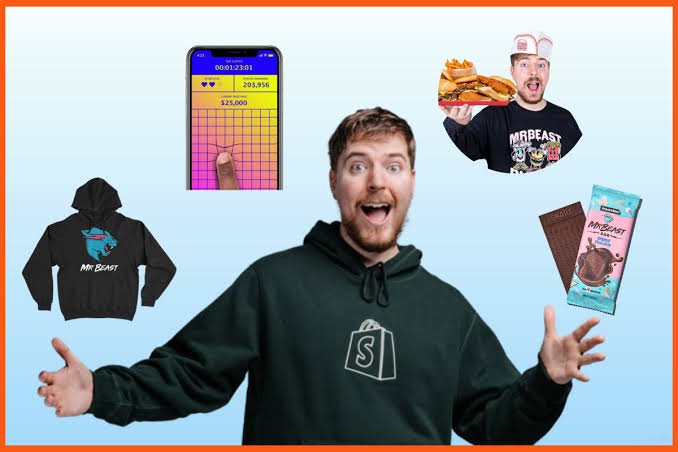
Launched in January 2022, Feastables is a chocolate and snack brand that has become the centerpiece of MrBeast’s broader consumer-products strategy. Unlike MrBeast Burger’s delivery-only, partnership-dependent model, Feastables was built as a directly owned and operated brand, sold both online and through major retail chains. The brand has grown rapidly, generating hundreds of millions of dollars in annual revenue by the mid-2020s and expanding into international markets, positioning it as one of the more commercially significant consumer packaged-goods launches associated with a digital creator to date. Feastables’ growth has been credited in industry analysis with proving that a creator’s built-in audience could function as a genuine, low-cost customer acquisition channel for a physical consumer brand, rather than merely a marketing platform for endorsement deals.
Feastables’ product strategy has combined mainstream retail distribution with frequent limited-edition releases and collaborations, a tactic borrowed in part from Donaldson’s YouTube content strategy of generating recurring novelty and urgency to sustain audience engagement. By 2024 and into 2025, industry reporting indicated Feastables had grown into one of the faster-growing confectionery brands in the U.S. market, with internal projections suggesting continued rapid expansion, driven in large part by placement in major national retail chains that gave the brand shelf presence far beyond what a typical direct-to-consumer startup could achieve in a comparable timeframe. Analysts have frequently cited Feastables as the clearest evidence that Donaldson’s business ambitions extend well beyond content creation into building enduring, standalone consumer brands capable of competing directly with long-established food and beverage companies.
MrBeast Burger
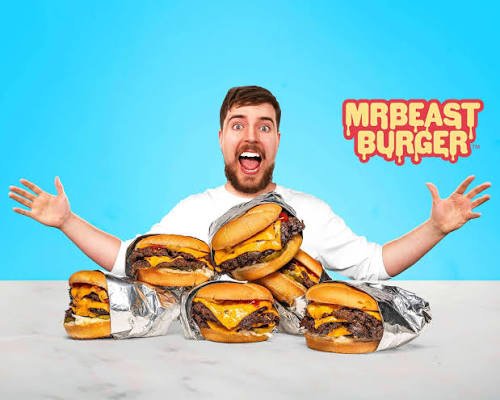
Launched in December 2020 during the COVID-19 pandemic, MrBeast Burger was a delivery-only “virtual restaurant” concept, operated in partnership with Virtual Dining Concepts (VDC), which fulfilled orders through existing restaurant kitchens rather than dedicated physical locations. The brand expanded rapidly, eventually reaching roughly 1,500 U.S. locations and around 200 international locations operating out of partner kitchens.
The partnership deteriorated over concerns about food quality and consistency. In mid-2023, Donaldson publicly criticized the brand over widespread customer complaints describing undercooked food, incorrect orders, and unbranded packaging, and in July 2023 he filed a lawsuit against Virtual Dining Concepts seeking to terminate the agreement, alleging that VDC had prioritized rapid geographic expansion over quality control and had used his name and likeness without proper consent. VDC filed a countersuit shortly afterward, alleging that Donaldson had breached his contract and publicly disparaged the brand, causing what it described as damages “in the nine-figure range.” The dispute effectively unwound the MrBeast Burger business, and the litigation has served as a widely cited case study in the risks creators face when licensing their personal brand to third-party operators without maintaining direct control over product quality.
The MrBeast Burger episode has since become a frequently referenced cautionary example within the broader creator economy, illustrating the structural risk of a “virtual restaurant” or ghost-kitchen licensing model, in which the brand owner has limited direct oversight over food preparation, packaging, and customer experience at the point of delivery, while still bearing the reputational consequences of quality failures. Donaldson has referenced the experience in subsequent interviews as a key factor behind his preference for directly owned and operated ventures, such as Feastables, where his company maintains far greater control over manufacturing, quality assurance, and brand presentation.
Beast Games
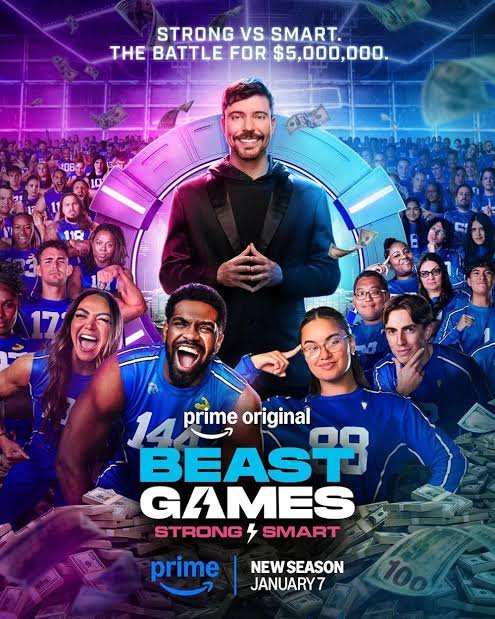
In March 2024, Amazon’s Prime Video announced Beast Games, a large-scale reality competition series developed and hosted by Donaldson, billed as one of the biggest game shows ever produced, with more than 1,000 contestants competing for a $5 million cash prize — later reported to have grown considerably by the finale — and a production budget reported at more than $100 million. The show drew directly on the extreme-stakes challenge format Donaldson had already popularized on YouTube, scaled up to television-production values and filmed at large venues, including Allegiant Stadium in Las Vegas, with subsequent rounds filmed in Toronto, Canada.
The format itself represented a deliberate translation of YouTube-native competition mechanics — mass elimination rounds, large cash stakes, and rapidly escalating physical and psychological challenges — into a serialized television structure, a format frequently compared by critics to South Korea’s Squid Game, though built around real cash prizes and voluntary participants rather than fictional stakes. Reviewers offered a mixed but largely engaged assessment of the show’s first season, generally praising its production scale and the novelty of seeing YouTube-style content translated into a premium streaming format, while some critics questioned whether the series fully replicated the emotional stakes and character development of more traditional scripted or long-running unscripted competition formats.
Beast Games’ production drew significant controversy before its debut. In September 2024, five anonymous former contestants filed a class-action lawsuit in Los Angeles Superior Court against Donaldson’s production company and Amazon, alleging that participants were misclassified as contestants rather than employees, and were denied minimum wage, overtime pay, and adequate meal and rest breaks. The lawsuit further alleged unsafe conditions, including inadequate medical care, sleep deprivation, and instances of hospitalization, as well as claims of sexual harassment during production. Representatives for the production and Amazon did not substantively respond to the allegations in public statements at the time, and the litigation proceeded through the California court system amid extensive media coverage.
Despite the controversy, Beast Games premiered on Prime Video in December 2024 to strong viewership, and Amazon renewed the series for two additional seasons, with the second season premiering in January 2026. Donaldson has publicly acknowledged that the show’s first season resulted in significant financial losses for his company despite its high viewership, citing the massive production costs involved, while defending the show’s broader creative and competitive ambitions. The Beast Games controversy has been widely discussed within the media industry as an early test case for how labor law applies to large-scale reality competition formats built around unpaid or minimally compensated participants, an issue with implications reaching well beyond Donaldson’s own productions.
Beyond the labor lawsuit, Beast Games drew broader scrutiny in entertainment trade press over the logistical complexity of coordinating a production of its scale, including a widely reported incident in which a promotional video shoot was disrupted by a combination of severe weather, an unrelated global technology outage, and other logistical complications, according to a representative for Donaldson’s production company. Industry analysts have generally described Beast Games as a high-risk, high-reward experiment in translating YouTube-native content formats into premium streaming television, noting that its combination of massive scale, real cash prizes, and Donaldson’s existing global audience gave it viewership advantages unavailable to conventional reality competition shows, even as its production and legal complications illustrated the operational challenges of scaling participant-driven content beyond YouTube’s more informal production norms.
Net Worth
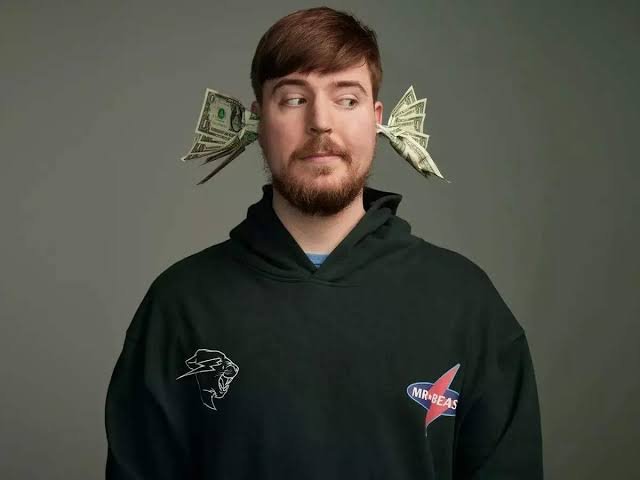
Estimating MrBeast’s net worth is complicated by the highly unusual structure of his wealth. According to Forbes, which tracks direct, verifiable annual income, Donaldson was ranked as the highest-earning individual content creator for multiple consecutive years, with reported earnings of approximately $85 million between 2024 and 2025 — a figure that reflects YouTube advertising revenue, sponsorship deals, and profit distributions, but excludes the broader paper value of his business holdings.
This gap between Forbes’ income-based methodology and broader net-worth estimates reflects a genuine measurement challenge rather than a simple discrepancy between competing sources: annual earnings figures capture cash flow generated over a specific period, while net-worth estimates attempt to capture the present value of long-term ownership stakes in a private, rapidly evolving company. Because Beast Industries does not publicly disclose detailed financial statements, outside estimates of its valuation rely on a combination of reported investor documents, comparable private-company valuations within the consumer-products and media sectors, and Donaldson’s own periodic public statements about revenue and growth — sources that, while informative, fall short of the audited disclosures available for publicly traded companies.
Separately, outlets including Fortune and Celebrity Net Worth have estimated Donaldson’s total net worth at approximately $2.6 billion as of 2026, a figure driven almost entirely by his roughly 50-percent-plus ownership stake in Beast Industries, the private holding company that encompasses Feastables, Lunchly, Beast Games production, and his YouTube operations, which has reportedly been valued at approximately $5 billion based on private investor documentation. Donaldson officially crossed into billionaire status, according to these estimates, in June 2024 at age 26, making him one of the youngest self-made billionaires on record.
Despite this substantial paper wealth, Donaldson has repeatedly emphasized in interviews that the vast majority of his fortune exists as illiquid company equity rather than cash, stating publicly that he maintains a comparatively small personal bank balance — at times citing figures under $1 million — because nearly all available capital is continuously reinvested into video production, new business ventures, and Beast Philanthropy. He has cited anecdotes, including reportedly borrowing money from his mother to help cover wedding-related expenses, to illustrate the gap between his company’s overall valuation and his personal liquid finances. As with all privately held company valuations, these net worth estimates should be understood as informed approximations rather than audited figures, and they are likely to continue shifting as Beast Industries’ various business lines mature.
This disconnect between paper wealth and available cash has become a recurring talking point in coverage of Donaldson, illustrating a broader shift in how wealth is created and measured within the creator economy compared to more traditional business or entertainment careers. Where a conventional entertainment career might generate wealth primarily through direct salary or licensing income, Donaldson’s fortune is structured almost entirely around equity ownership in a private, rapidly growing holding company — a model closer to that of a venture-backed startup founder than a traditional media personality. Financial commentators have noted that this structure carries both greater long-term upside, should Beast Industries continue to grow or eventually pursue a public offering or acquisition, and greater risk, since the bulk of Donaldson’s wealth remains tied to the continued performance of a diversified but still relatively young set of businesses rather than diversified, liquid assets.
Awards and Recognition
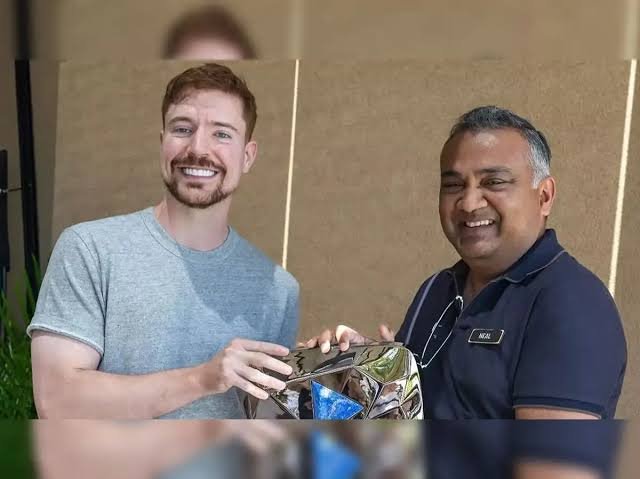
- Streamy Awards — Creator of the Year: MrBeast won the Streamy Award for Creator of the Year in 2020, 2021, 2022, and 2023, reflecting sustained recognition from the digital content industry across multiple consecutive years.
- Nickelodeon Kids’ Choice Awards: MrBeast has received recognition at the Kids’ Choice Awards, reflecting his crossover popularity among younger audiences alongside traditional television and film talent.
- Forbes recognition: MrBeast has repeatedly topped Forbes’ annual ranking of the highest-paid YouTube creators, a recognition regularly cited in coverage of the broader creator economy.
- Guinness World Records: MrBeast has been credited with multiple Guinness World Records tied to subscriber milestones and specific large-scale video projects.
- Shorty Awards: Team Trees and Team Seas, the environmental fundraising campaigns Donaldson co-organized with Mark Rober, received recognition at the Shorty Awards for their scale and cultural impact.
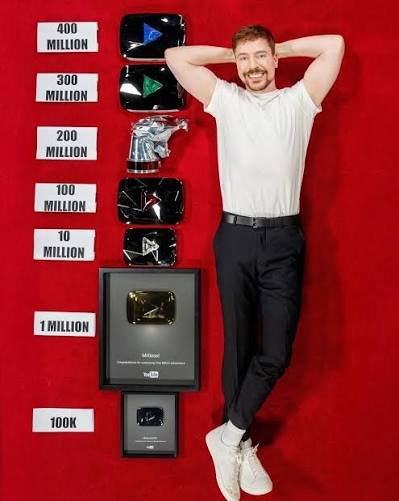
Beyond formal award ceremonies, Donaldson’s career milestones have themselves become widely tracked and reported achievements in their own right, including his surpassing of T-Series in 2024 to become the most-subscribed individual YouTube channel, and his subsequent 2025 milestone as the first individual creator to reach 400 million subscribers — both treated by industry publications such as Tubefilter and Business Insider as significant benchmarks in YouTube’s platform history rather than conventional awards, but nonetheless widely cited as among the most consequential markers of his career achievements to d
Family and Personal Life

Donaldson has generally kept details of his personal life more private than his public YouTube persona might suggest, though several facts are well documented. He is the son of Susan Parisher and Charles Donaldson, whose divorce in 2007 shaped much of his adolescence; he has an older brother. He has spoken candidly in some interviews about living with Crohn’s disease, which he has said affected his health and daily routines from a young age, though he has generally addressed the topic in a low-key, factual manner rather than making it a central part of his public identity.
Since 2022, Donaldson has been in a relationship with Thea Booysen, a South African social media personality, and the couple became engaged in 2024. His closest professional collaborators — Chris Tyson, Chandler Hallow, Karl Jacobs, and others who appear regularly across his YouTube channels — are also longtime personal friends, several of whom he has known since childhood or his earliest years of channel-building, and who have grown alongside him into senior creative and production roles within his broader organization.
Donaldson has cultivated a public image built around relentless work ethic, describing extremely long working hours and an almost singular focus on his business and content, a persona that has been the subject of both admiration and criticism as his company has scaled and faced increased scrutiny over working conditions for employees and production participants.
Despite his enormous public profile, Donaldson has generally maintained a more private stance regarding his day-to-day personal life compared to his highly visible on-camera persona, rarely discussing details of his home life, daily routine outside of work, or personal relationships beyond what he has chosen to share directly through interviews or social media posts. He has spoken about relocating his company’s headquarters and much of his personal life to remain based in Greenville, North Carolina, rather than more traditional media hubs such as Los Angeles or New York, a decision he has attributed to both practical business considerations, including lower operating costs, and a personal preference for maintaining ties to the community where he grew up and built his earliest content.
Legacy
While MrBeast’s career remains very much in progress, his impact on YouTube and the broader creator economy to date is already substantial. He has redefined the scale at which individual creators can operate, demonstrating that a YouTube channel could grow into a diversified, multi-hundred-million-dollar business empire spanning philanthropy, consumer products, and television production, rather than remaining a single advertising-revenue-dependent channel. His reinvestment-first philosophy has become a widely studied model within the creator economy, credited with enabling both his channel’s unprecedented subscriber growth and the broader business empire built around it.
At the same time, MrBeast’s rapid scaling has surfaced structural tensions that are likely to remain part of his ongoing legacy: labor disputes tied to Beast Games, the unwinding of the MrBeast Burger partnership, and broader public debate over the ethics and sustainability of philanthropy packaged as entertainment content. How these tensions are resolved — and how Beast Industries continues to evolve as a diversified consumer and media company — will likely shape assessments of his career for years to come, alongside his continued standing as the most-subscribed individual creator in YouTube’s history.
Because Donaldson remains in the relatively early stages of his career by comparison with more established entertainment and business figures, assessments of his ultimate legacy remain necessarily provisional. Media historians and creator-economy analysts have generally agreed, however, that his impact on the operational and financial norms of online content creation — treating a YouTube channel as the foundation for a diversified, reinvestment-driven business empire rather than a standalone media product — has already proven durable and influential, regardless of how his individual ventures continue to perform. Whether Beast Industries ultimately matures into a lasting, diversified media and consumer conglomerate, or whether some of its current ventures prove to be transitional steps in a still-evolving business strategy, MrBeast’s career to date has already established a widely referenced template for how individual digital creators can scale far beyond the traditional boundaries of online content into consumer products, television, philanthropy, and beyond.
YouTube Statistics
Subscriber Growth
| Year | Approximate Subscribers |
| 2017 | Under 1 million |
| 2019 | ~20 million |
| 2021 | ~70 million |
| 2023 | ~200 million |
| June 2025 | 400+ million |
| 2026 | Approaching/exceeding 500 million |
Major Channels
| Channel | Focus |
| MrBeast | Main challenge and giveaway content |
| MrBeast Gaming | Gaming-focused content |
| MrBeast 2 | Secondary challenge content |
| Beast Reacts | Reaction-style videos |
| MrBeast 3 | Additional challenge content |
| Beast Philanthropy | Dedicated charitable content and operations |